For growing hospitality brands, expansion is rarely limited by ambition. Every new market introduces different buildings, permitting requirements, infrastructure constraints, and customer expectations.
Successfully navigating that complexity requires a coordinated design strategy that can scale without compromising operations or the patron experience. Wonder, the rapidly growing food hall concept redefining the dining experience, is a prime example. As the company expands beyond its New York City roots into markets like Massachusetts and Texas, each new location presents a unique set of architectural and operational challenges.
Behind every opening is a carefully orchestrated design process that balances the brand's standardized operating model with the realities of each individual site. That's where HFA comes in. When Steven Baker, Hospitality Lead at HFA, engages with a new client, he starts by clarifying their expansion targets.
"What are your goals?" he asks clients. "Do you want to build 20 sites a year? Eighty sites a year?’ Once we understand that vision, we build a team specifically around supporting those goals."
That philosophy reflects HFA's broader approach to national rollout programs. Rather than asking clients to fit into an existing workflow, the firm builds dedicated, multidisciplinary teams around each client's growth strategy. As expansion goals evolve, so do the teams supporting them. This intentional approach has become increasingly important as Wonder's growth accelerates. The company celebrated its 150th location earlier this year and continues expanding into new markets.
Unlike a traditional quick-service restaurant, Wonder's concept centers around a single kitchen capable of producing menu items from more than 20 restaurant brands. While patrons experience a seamless ordering process, the complexity behind the scenes is substantial.
"When we start thinking about a site, we begin with Wonder's architectural template," explained Jackie Jiovanazzo, Architectural Team Lead for the Wonder program. "They maintain a kit of parts that includes all the equipment, furniture, and tools needed to operate a location. Depending on the projected business volume, there are different tiers that determine how much equipment each restaurant requires."
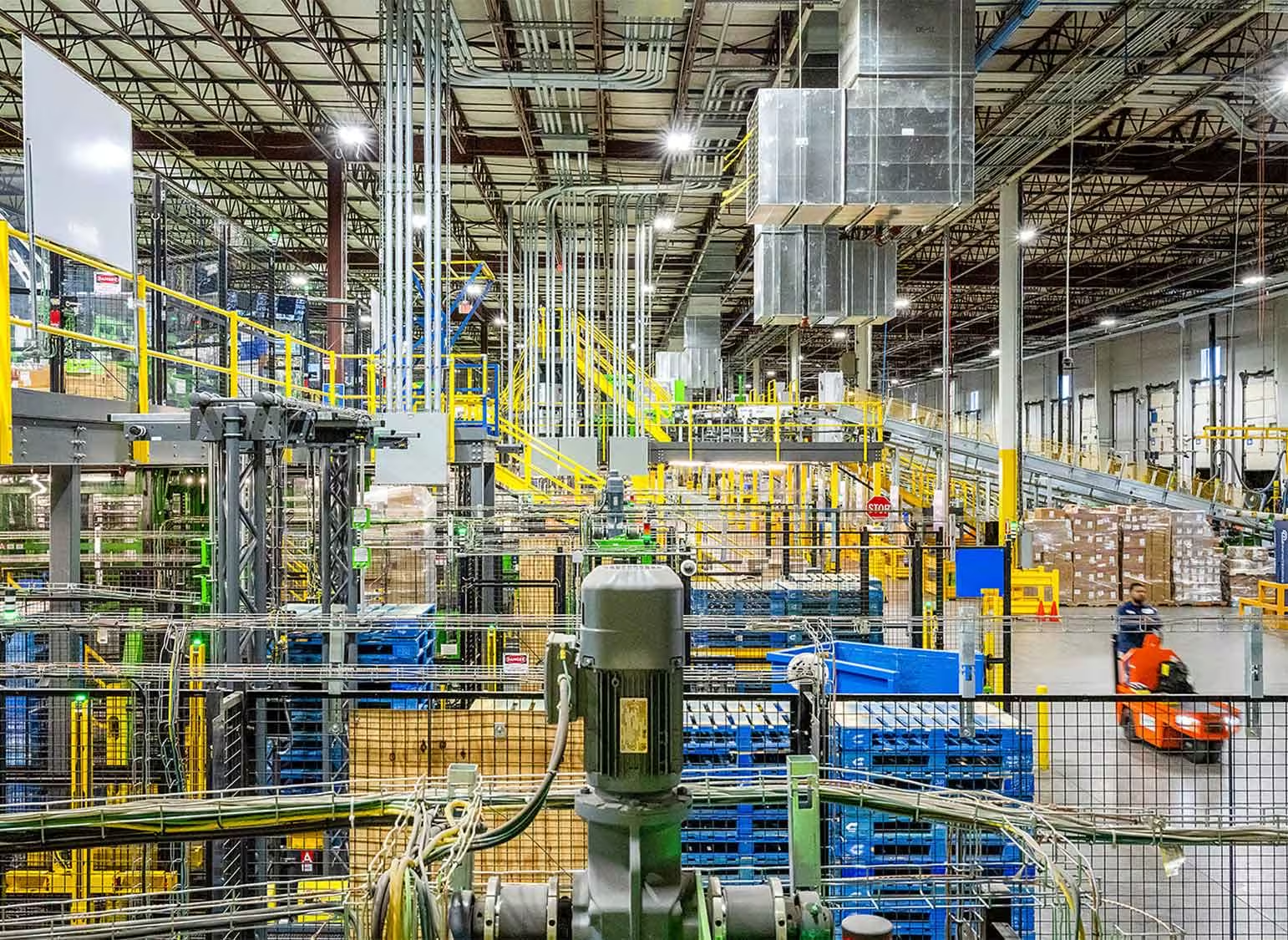
From there, HFA adapts that operational framework to each individual building and work extends well beyond placing kitchen equipment. The team studies building structure, mechanical systems, electrical capacity, grease hoods, utility upgrades, delivery access, equipment replacement paths, and even exterior trash enclosures. Every decision influences how efficiently the restaurant will operate both on opening day and years into the future.
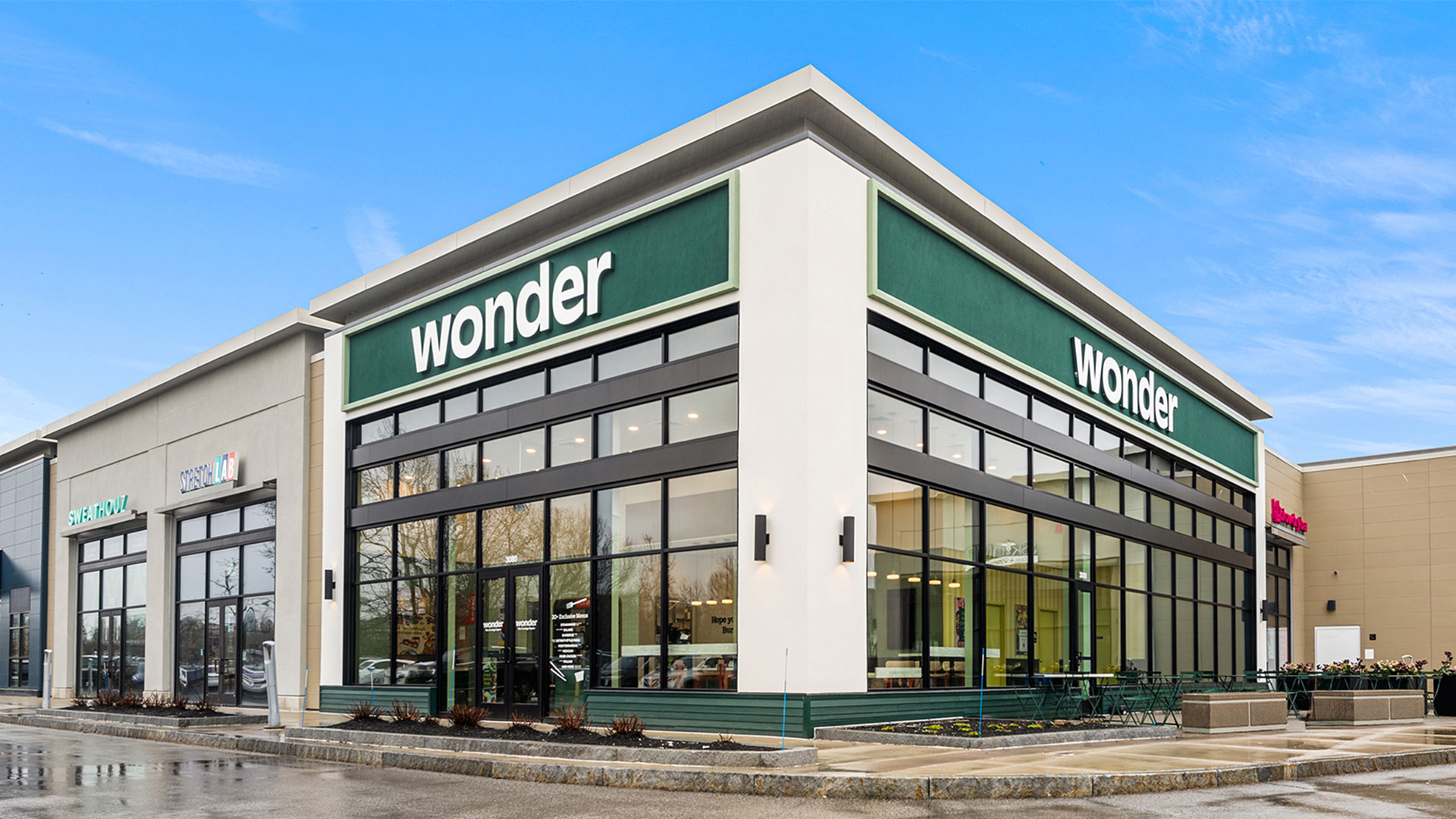
That level of coordination becomes even more critical because many Wonder locations begin as adaptive reuse projects. Former retail spaces are transformed into highly technical commercial kitchens, requiring significant upgrades to utilities and building systems before construction can even begin.
According to Baker, feasibility is often the first hurdle.
"Many of these locations have been tenant infill spaces or conversions from retail into restaurants," he said. "There's a lot of feasibility work upfront, but once we know a site will work, we focus on how patron experience and how they move through the space."
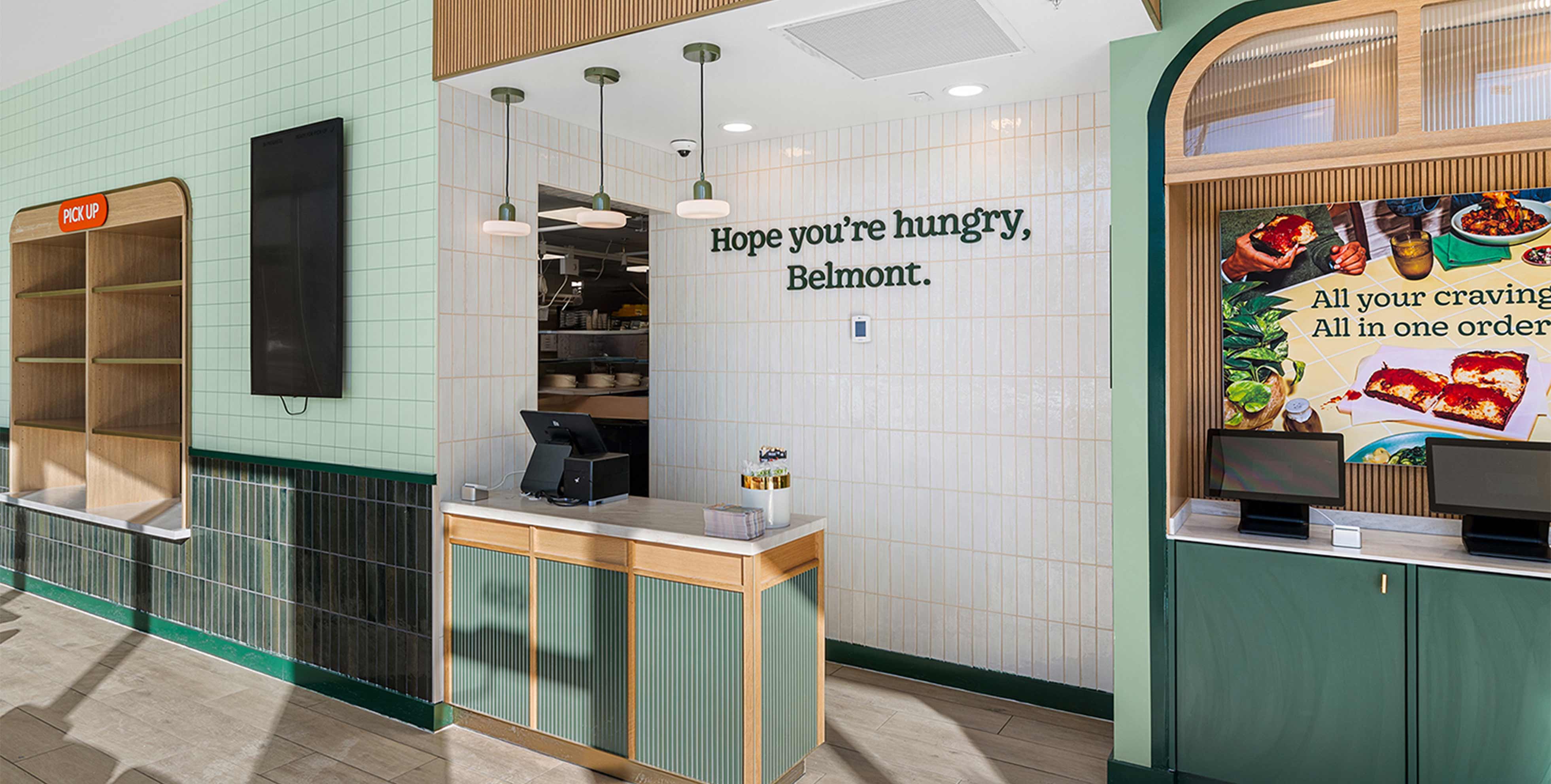
Rather than designing only for diners, HFA maps three separate user experiences: patrons ordering in person, customers picking up online orders, and third-party delivery drivers. The goal is to create an environment where all three can move efficiently without disrupting one another.
As Wonder enters new regions, those design considerations continue to evolve. The company's expansion into Texas introduced a dramatically different set of opportunities than the dense urban environments where the brand first established itself.
Instead of compact tenant spaces with limited customer seating, projects increasingly involve full building conversions, larger dining rooms, outdoor patios, and drive-thru pickup lanes. Drone delivery will be a consideration too, as Wonder announced its partnership with Zipline beginning in 2027.
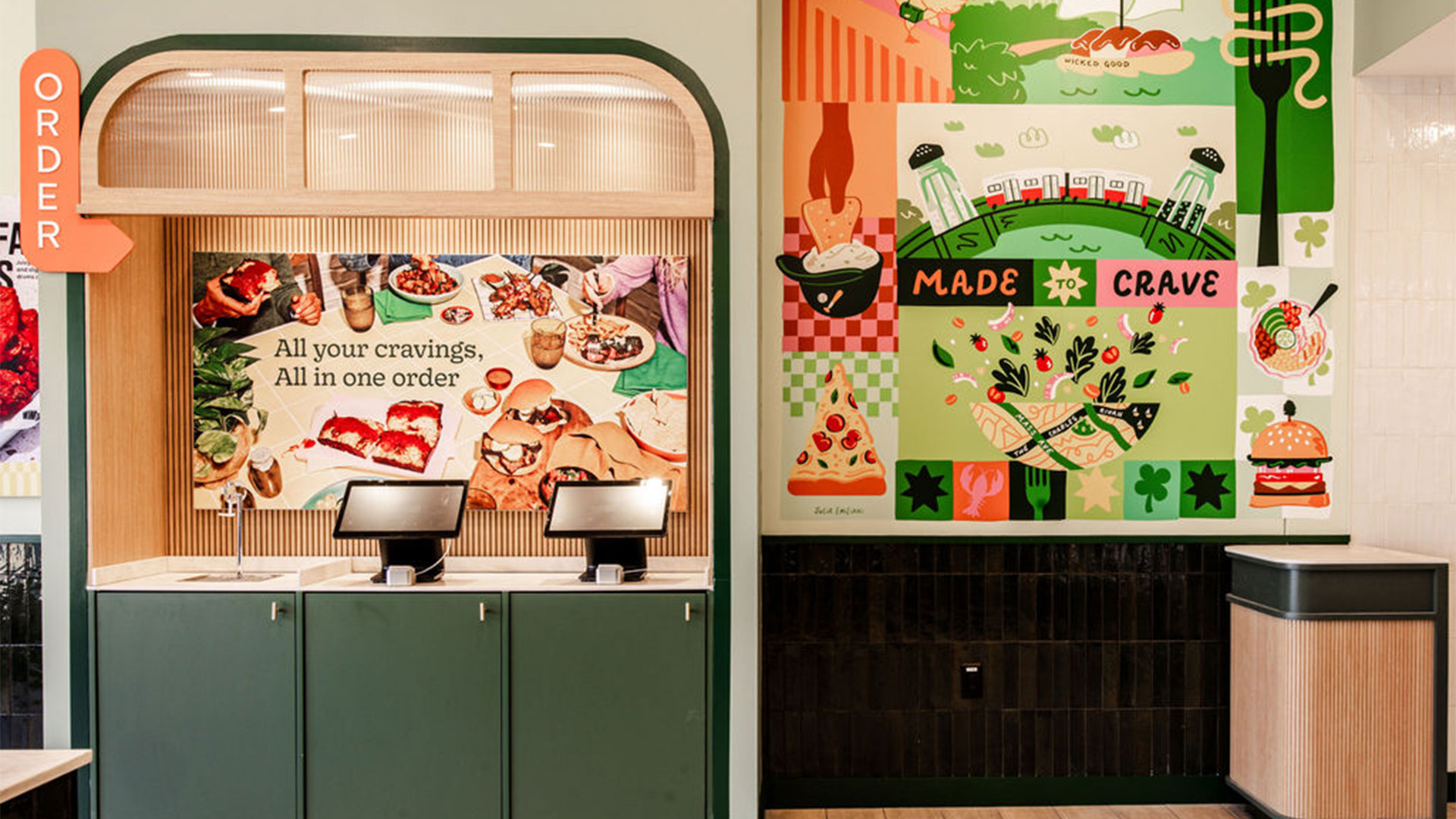
"Everything is bigger in Texas," Jiovanazzo said with a laugh. "We're adapting to larger front-of-house spaces, outdoor seating, and even drive-thru opportunities. That's a very different design challenge than the smaller tenant infill spaces they started with in the Northeast."
Those differences reinforce a core principle of HFA's hospitality practice: national growth still requires local expertise. A prototype may establish operational standards, but successful expansion depends on adapting those standards to each market rather than forcing every building into the same mold.
Regional expertise becomes just as valuable as technical expertise.
While Wonder's early markets relied heavily on firms deeply familiar with New York and New Jersey development, HFA's national presence has allowed the team to support expansion into new regions with confidence. "When they wanted to expand nationally, that's where we were able to say, 'We've got it,'" Baker said. "We have regional offices, local expertise, and licensed professionals who understand those markets."
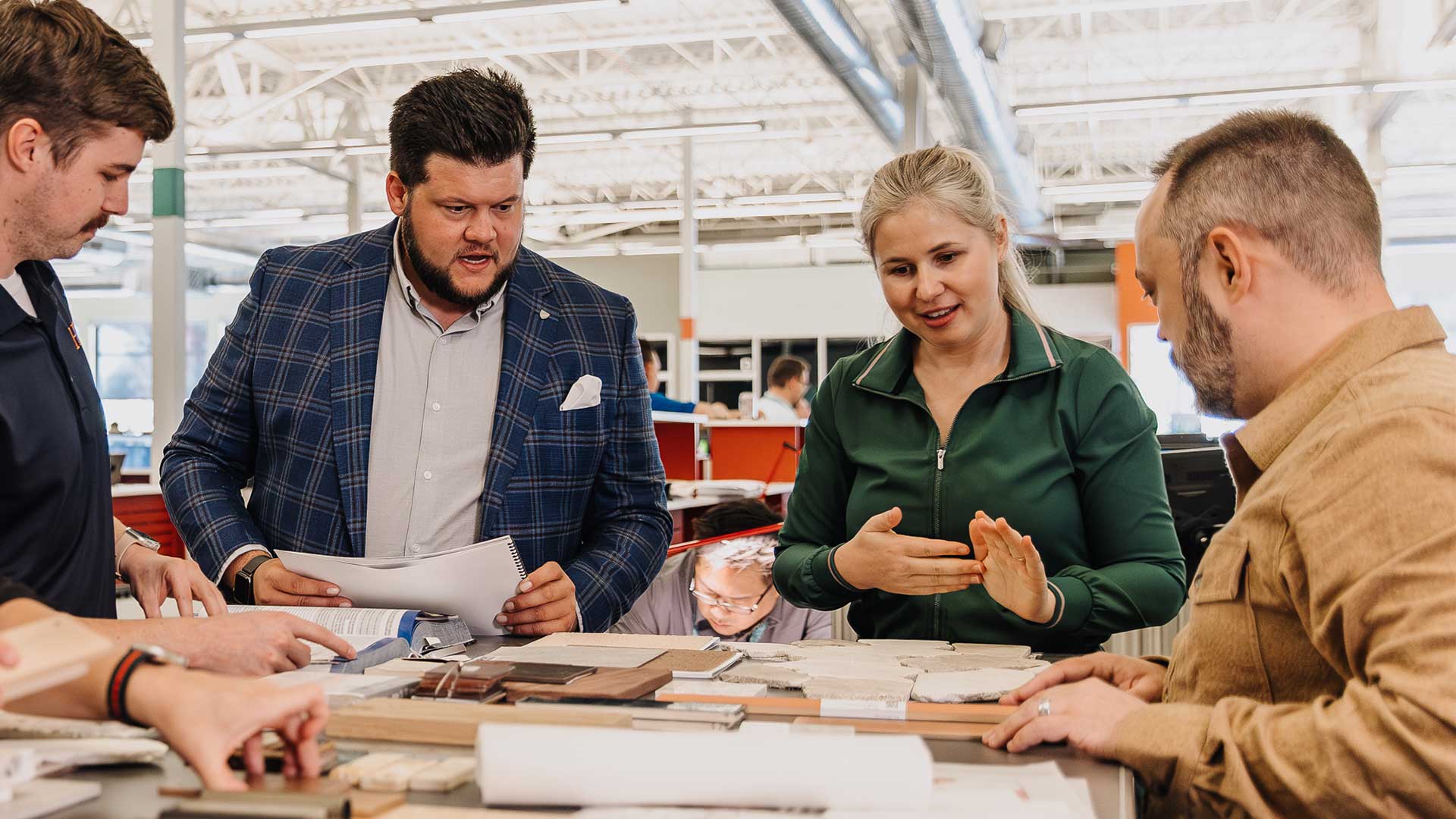
Perhaps most importantly, HFA has scaled alongside its client. What began as a small architectural team has grown into a dedicated multidisciplinary group supporting Wonder's expanding project pipeline. Wonder operates its current 150 locations in 10 states plus Washington D.C. HFA designed 24 of those locations in six states with significantly more in development. Architecture, mechanical, electrical, plumbing, structural, and fire protection teams have all strategically increased resources together rather than independently. What started as a dedicated team of four quickly scaled to a team of 14.
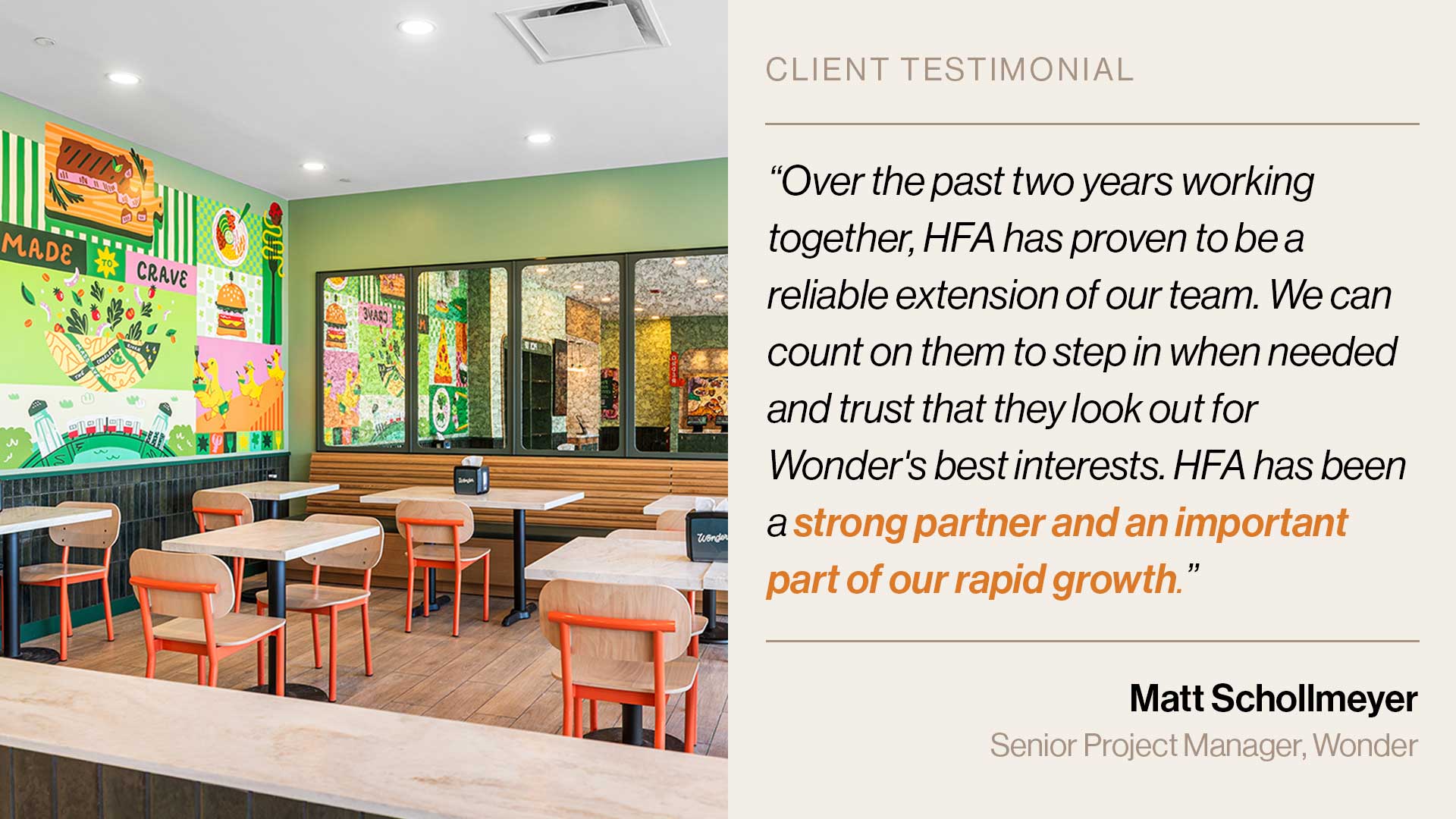
"It's our One HFA approach," Baker said. "All of our disciplines have aligned around the same growth strategy. We're not waiting on outside consultants or trying to coordinate multiple firms. Everyone is involved from day one."
That integrated structure has become essential given Wonder's fast-paced schedule. Once a site is approved, complete construction documents often move to permit in as little as eight weeks.
"It isn't copy and paste," Baker said. "Every site is different because every building is different. It takes a lot of intentionality and understanding to create modified designs that still move at speed." Jiovanazzo agrees that communication is what keeps the process moving. "We work very hard to keep everyone aligned on schedules and deliverables across every discipline," she said. "We're one team.”
For restaurant brands looking to scale nationally, that's the difference between simply designing locations and building a program capable of sustained growth. As Wonder continues expanding across the country, HFA's role extends beyond architecture. The firm provides the systems, expertise, and integrated collaboration that help transform an ambitious rollout strategy into a repeatable process, one location at a time.
.avif)
.avif)

(1).avif)


.avif)